Versailles: Pasqua alla Chapelle Royale
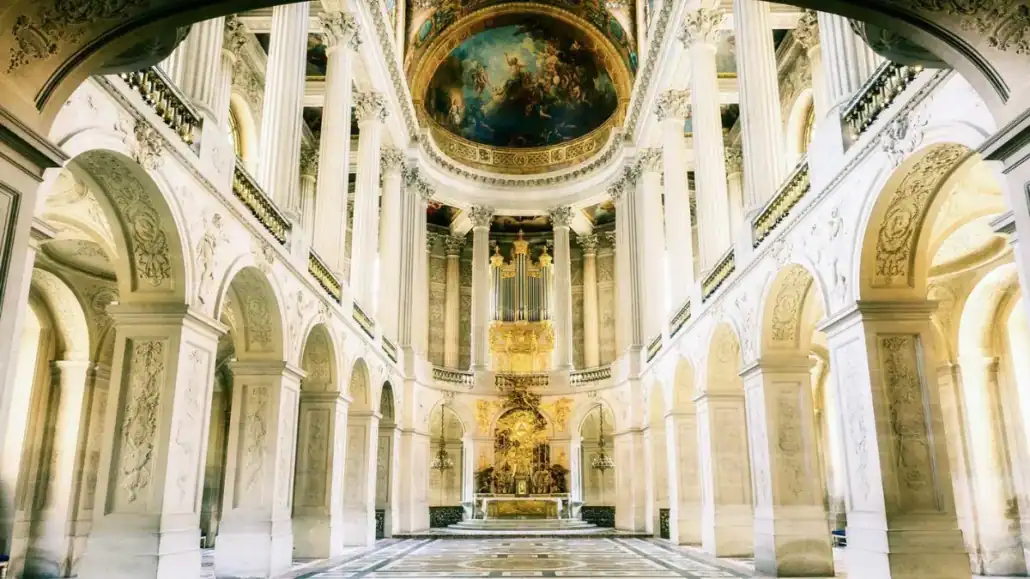
Il Giovedì Santo è stato celebrato con sobria reverenza nella Chapelle Royale del 1710, con tre lavori della Francia del XVIII secolo.
Le armonie dello Stabat Mater a cinque voci di Sébastien de Brossard, che mette in musica l’inno trecentesco alla Vergine addolorata ai piedi della Croce, guardano al Rinascimento pur lasciando trasparire l’influsso italianeggiante dei suoi contemporanei. Sul Vidit suum aleggiava l’ombra di Allegri, mentre Eia mater e Fac me cruce custodi trasudavano una gioia interiore. I soli, affidati a membri non nominati del Chœur de l’Opéra Royal, meritavano maggiore riconoscimento; in particolare il baritono grave e sincero di Tui nati vulnerati era di grande finezza.
Segue il drammatico, e troppo poco eseguito, Le reniement de Saint-Pierre di Marc-Antoine Charpentier, su testi evangelici latini tratti in gran parte da Matteo, giunto fino a noi grazie alla copia di Brossard e perfettamente esemplificativo del suo stile di transizione. In una forma che prelude alle Passioni, un narratore – l’Historicus – racconta la vicenda, mentre il coro commenta l’azione. I solisti hanno colto appieno la caratterizzazione: Cristo era un basso dignitoso e severo, Pietro un tenore ora servile, ora inquieto. Memorabili i momenti in cui il coro, nei panni dei discepoli, proclama con voci sovrapposte. Non te negabimus, e quando Malco e le due ancelle incalzano Pietro, che oppone vaghi belati di diniego.
Infine la musica precipita in un lamento cupo, chiaramente debitore del maestro di Charpentier, Carissimi. Il coro sottolinea l’istante in cui Pietro ricorda le parole di Cristo con un prolungato e insistito Tunc (“allora”), soffermandosi con gusto grave su flevit amare (“pianse amaramente”), lasciando lui – e noi – sull’orlo dell’abisso.
I Vespri di Tenebrae si sono svolti dal mercoledì al Venerdì Santo. I testi delle Leçons provengono dalle Lamentazioni di Geremia, con lunghi melismi sulle lettere ebraiche che introducono ogni versetto latino. I soprani Catherine Trottmann e Ana Vieria Leite sono risultati eccellenti nelle prime due delle Trois Leçons de Ténèbres pour le Mercredi Saint di François Couperin, con voci pure e linee eleganti. L’inizio della terza lezione, con entrambe le voci che fioriscono in melismi attorno alla lettera Ioth, è stato un istante di bellezza cristallina. Peccato fosse talvolta difficile distinguere le parole, nonostante il testo. L’acustica lievemente riverberante non era la causa, come ha dimostrato la chiarezza dei solisti e dei cori nella più ampia Passione secondo Matteo di Bach, il giorno seguente.
Chloé de Guillebon ha diretto in piedi da un organo positivo accoppiato a un clavicembalo, con autentico senso del colore e della narrazione. La sua vicinanza fisica ai cantanti ha permesso di plasmare parola per parola, sostenuta dal timbro caldo della viola da gamba di Claire Gautrot e dalle tiorbe di Léa Masson e Morgan Marquié.
Durante i Tenebrae le candele si spengono una ad una, lasciando la congregazione nell’oscurità. Qui i gruppi di candele elettriche si sono affievoliti gradualmente, ma senza condurre al buio completo. Dopo un’ora e un quarto di silenziosa gioia, il pubblico è esploso in un applauso fragoroso e sincero.
Fiona Hook
Original in English
Easter Thursday was quietly and reverently marked in Versailles’ 1710 Chapelle Royale at with three works from 18th-Century France.
The harmonies of Sébastien de Brossard’s Stabat Mater, a five-part setting of the 13th-century hymn to the Virgin Mary portraying her suffering during Christ’s crucifixion look back to the Renaissance, while showing the Italianate influence of his contemporaries. The shadow of Allegri hovered over Vidit suum. Eia mater and Fac me cruce custodi were filled with inner joy. The solos were taken by unnamed members of the Chœur de l’Opéra Royal, a pity, because the grave and sincere baritone of Tui nati vulnerati was particularly fine.
Marc-Antoine Charpentier’s deeply dramatic and insufficiently well-known Le reniement de Saint-Pierre (St Peter’s denial), setting Latin gospel texts drawn largely from Matthew, survived because Brossard copied it, and it shares his transitional style. In a format that looks forward to the Passion settings, a narrator – Historicus – tells the story, with a chorus commenting on the action. The soloists immersed themselves in Charpentier’s skilful characterisation – Christ was a dignified and sombre bass, Peter a tenor by turns sycophantic and nervous. In two stand-out moments the chorus become disciples, vigorously asserting that they will be faithful with multiple overlapping cries of Non te negabimus, and Malchus and the two servant maids bully Peter, while he weakly bleats his denial.
Finally, the music shifts completely, plunging into a sombre lament obviously influenced by Charpentier’s teacher, Carissimi. The chorus underline the moment at which Peter remembers Christ’s words with a long-drawn out and repeated Tunc: (then) and dwell with sombre relish on flevit amare (wept bitterly), leaving him, and us, facing an abyss.
The Tenebrae services were held on Wednesday to Friday of Holy Week. The texts for the Leçons comes from the Lamentations of Jeremiah, with a long melismas on the Hebrew letters introducing each Latin verse. Sopranos Catherine Trottmann and Ana Vieria Leite were both outstanding in the first and second of François Couperin’s Trois Leçons de Ténèbres pour le Mercredi Saint, pure of voice and shapely of line. The opening of the third lesson, both voices beautifully melismatic around the letter Ioth, was a moment of purest beauty. Sadly, it was sometimes difficult to distinguish the words even with the text. The somewhat reverberant acoustic was not to blame, as both soloists and choruses in Bach’s much larger St Matthew Passion the following day were perfectly clear.
Chloé de Guillebon directed standing from a chamber organ coupled to a harpsichord, with a real feeling for colour and narrative. Her physical proximity to the singers enabled a shaping of individual words and phrases, ably supported by Claire Gautrot’s warm viola da gamba and Léa Masson and Morgan Marquié on theorboes.
During a Tenebrae service, the candles would gradually be extinguished leaving the congregation in darkness. Here groups of electric candles slowly went out, sadly not to complete blackness. After an uninterrupted hour and a quarter of quiet joy, the audience erupted into its noisy and heartfelt expression.
Fiona Hook
La locandina
| Direttrice | Chloé de Guillebon |
| Soprano | Catherine Trottmann |
| Soprano | Ana Vieria Leite |
| Tiorbe | Léa Masson, Morgan Marquié |
| Viola da gamba | Claire Gautrot’s |
| Chœur de l’Opéra Royal | |
| Programma: | |
| Sébastien de Brossard | |
| Stabat Mater | |
| Marc-Antoine Charpentier | |
| Le reniement de Saint-Pierre | |
| François Couperin | |
| Trois Leçons de Ténèbres pour le Mercredi Saint | |
 Brescia e Amisano

 Ph. Comune di Vicenza - Creative Commons Attribution 4.0 International
 Ph. Giulia Nuti
 Ph. Michel Monasta


Lascia un Commento
Vuoi partecipare alla discussione?Sentitevi liberi di contribuire!